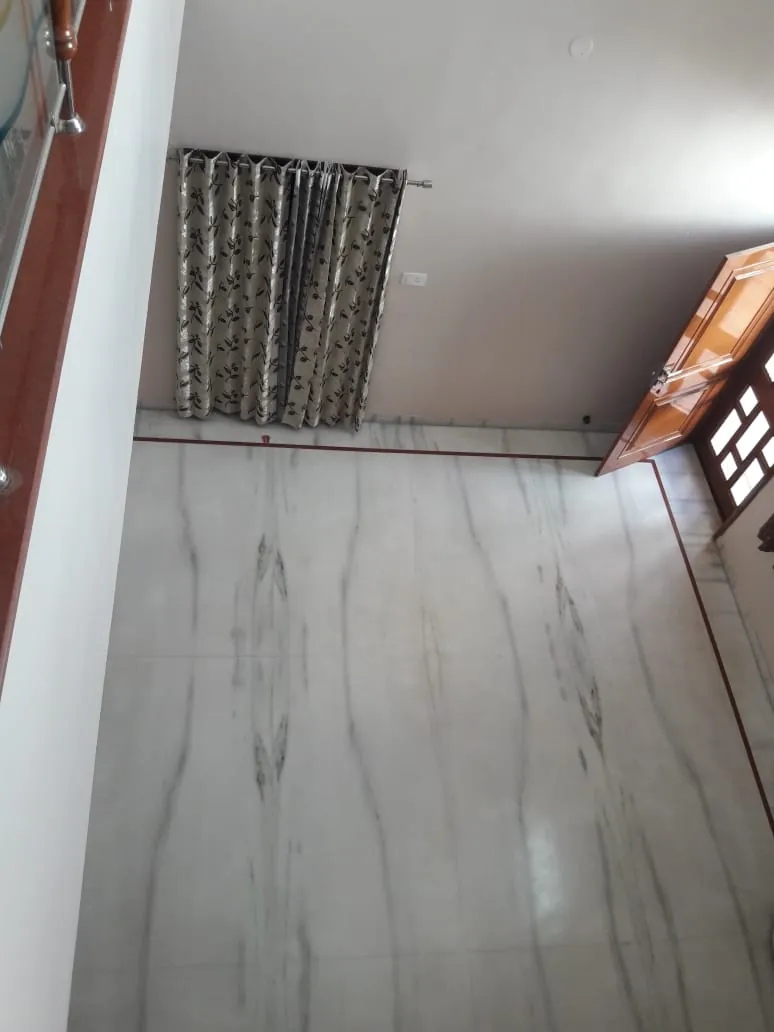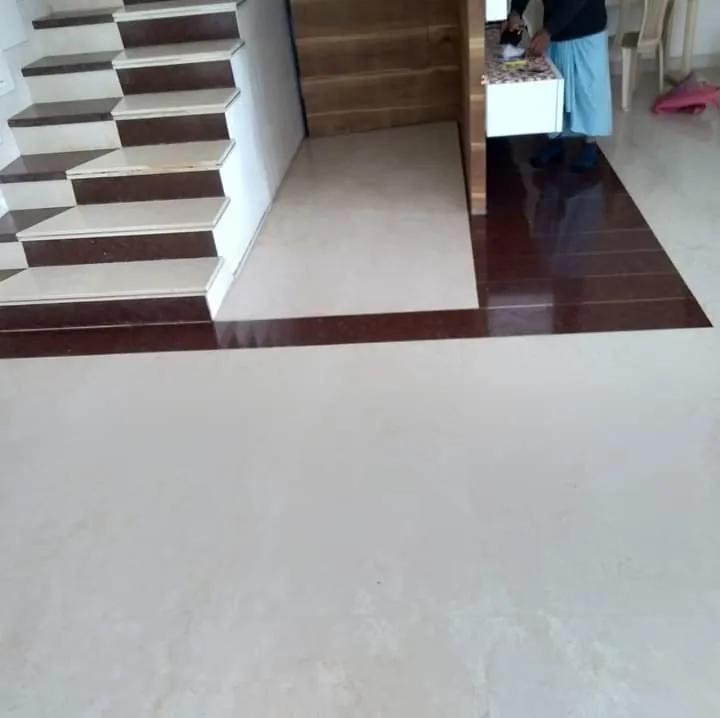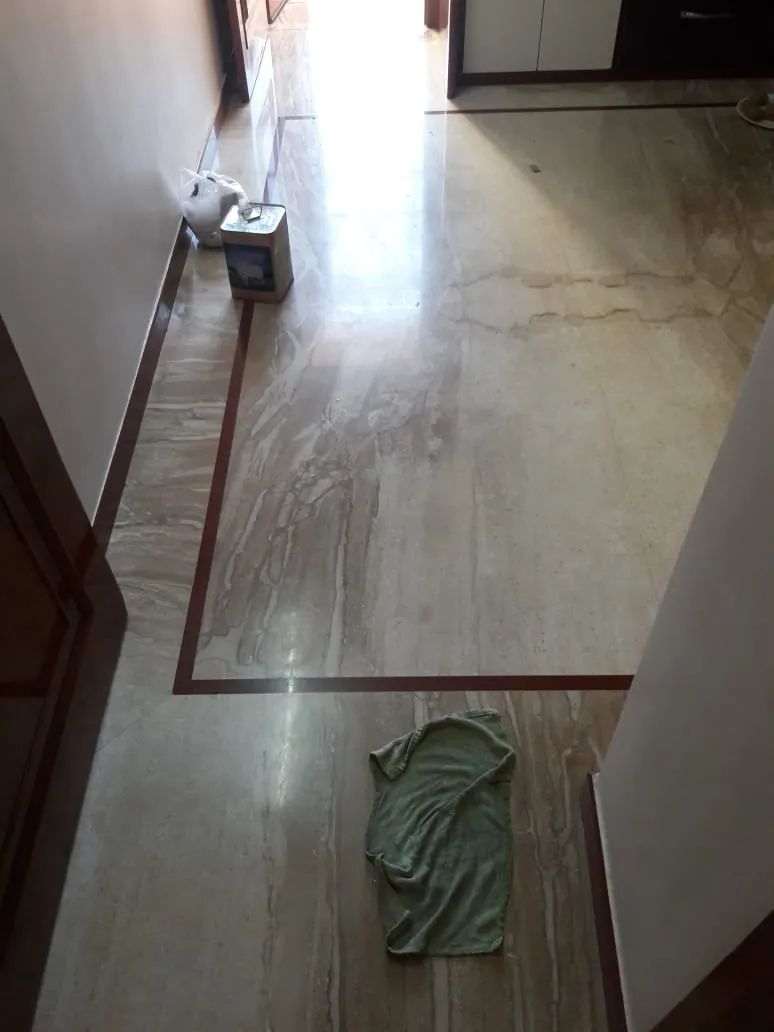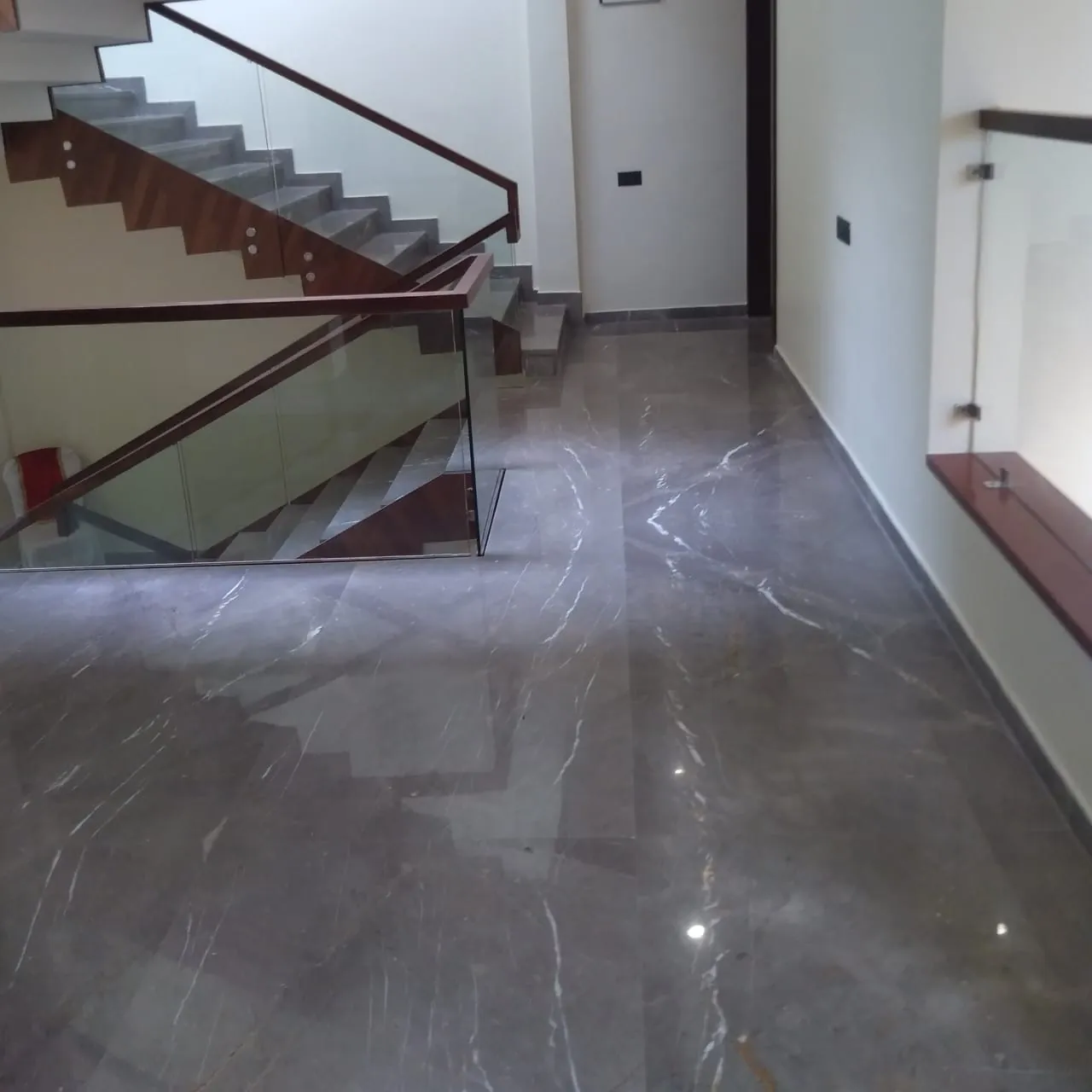
When clients ask for "mirror polish" on their marble, they usually have heard two terms: diamond polish and crystal polish. Some think these are two brands, some think one is a premium version of the other. In reality they are two different processes that are often used together. Understanding the difference helps you choose the right finish and avoid paying for shine that disappears in a few months.
What is diamond polishing?
Diamond polishing is a mechanical process. A floor polishing machine is fitted with diamond abrasive pads or bricks, starting coarse and moving to fine. Each stage removes the scratches of the previous one, until the marble surface itself is smooth enough to reflect light.
A typical sequence on a newly fixed floor is:
- Grinding: coarse diamonds flatten the floor and remove lippage between slabs.
- Joint filling: joints are filled with matched filler or white cement and allowed to set.
- Honing: medium grits remove grinding marks.
- Polishing: fine grits bring out the shine from the stone itself.
The shine from diamond polishing comes from the stone, so it lasts. It slowly reduces with wear but does not peel or flake.
What is crystal polishing?
Crystal polishing, also called crystallisation, is a chemical-mechanical process done after diamond polishing. A crystallising compound is sprayed on the floor and worked in with a steel wool pad under a machine. The compound reacts with the top layer of the marble and creates a harder, glossier surface.
The result is a very high, glassy shine. But it is a thin layer at the very surface, and it wears faster in walking paths, especially where sand and dust come in.
Key differences
| Point | Diamond polish | Crystal polish |
|---|---|---|
| Process | Mechanical, abrasive stages | Chemical reaction plus buffing |
| Shine source | The marble itself | Treated top layer |
| Gloss level | Good to high | Very high, glassy |
| Flattens floor | Yes, in grinding stage | No |
| Removes scratches | Yes | Only very light ones |
| Durability | Long lasting | Shorter, needs top-ups |
Indicative costs
Rates vary by city, area size and floor condition. As a rough guide in Rajasthan, diamond polishing of a new Indian marble floor often falls in the range of Rs 12 to Rs 35 per sq ft depending on the number of stages. Crystal polishing on top usually adds something like Rs 5 to Rs 15 per sq ft. Small areas, heavily damaged floors and very hard stones cost more. Always ask what stages are included.
How long does each finish last?
- Diamond polish: in a normal home, the shine stays good for several years. High traffic zones like entrances dull first.
- Crystal polish: the extra gloss may last from a few months to a year or two depending on traffic, cleaning and dust. It can be refreshed without full grinding.
Which one should you choose?
For a new floor
Diamond polishing is not optional. Every new marble floor needs grinding and polishing to be flat and smooth. Crystal polish is an optional extra on top.
For homes
A good multi-stage diamond polish is enough for most rooms. Add crystal polish in the drawing room or hall if you want a special shine for an event such as griha pravesh or a wedding, knowing that it will need occasional top-ups.
For temples
Temple floors are washed daily and see heavy footfall. We usually recommend diamond polish only, and a lower gloss on steps and parikrama paths for safety. Crystal polish on a wet temple floor can be slippery.
For old dull floors
If the floor has scratches, lippage or etching, crystal polish alone will not fix it. It needs diamond grinding and polishing first. Crystal polish on a scratched floor only makes a shiny scratched floor.
What a proper polishing day looks like on site
On a new floor we usually start polishing only after the mortar has cured well, typically around ten to fourteen days after fixing, depending on weather. Furniture, wooden doors and walls up to a foot high are covered because the slurry splashes. Water is used continuously during grinding to cool the diamonds and carry away the marble dust, and the slurry is cleaned up between stages so it does not settle into joints.
Edges and corners are done with a smaller hand machine, because the main machine cannot reach them. This is where many low-cost jobs fall short: the centre of the room shines but the floor along the walls stays dull. Ask the polishing team how they will finish edges, under staircases and around pillars.
At the end, the floor should be dry-buffed and inspected in daylight from a low angle. That is the best way to see swirl marks, dull patches or missed joints before the team leaves the site.
Warning signs of a poor polishing job
- Shine that disappears in weeks, meaning only a chemical or wax was applied
- Swirl marks visible in sunlight
- Lippage still felt at joints
- White powder residue in joints and corners
- Dark or burnt patches from steel wool overheating
Caring for a polished floor
- Dry mop daily and keep doormats at every entrance.
- Use only pH-neutral cleaners; acids destroy both kinds of polish.
- Avoid wax-based products that build up and turn yellow.
- Plan a light polish refresh before the floor gets badly dull.
More details on restoring old floors are in our guide to marble re-polishing on the blog.
Frequently asked questions
Is crystal polish harmful to marble?
Done correctly it is not harmful, but overuse or poor technique can leave patches. It should always be done on a properly diamond-polished floor.
Can I get mirror shine without crystal polish?
Yes. A hard marble like good Makrana can reach a very good shine with diamond stages alone.
How often should I re-polish?
It depends on traffic. Many homes need a light polish every few years, and entrances or shops more often.
Does polishing make marble slippery?
A high gloss is more slippery when wet. Use a lower gloss in bathrooms, steps and outdoor areas.
Marble Fixing Flooring handles grinding, diamond polishing and crystal finishing on new and old marble floors. Learn more about our marble flooring work, and for Udaipur area projects see marble fixing in Udaipur. You can request a site visit through our contact page.
Marble Fixing & Flooring in Rajasthan & across India
Makrana, Dungri, Albeta, Kumari, Rajnagar, Kota and other Indian marble and stone fixed to drawings, from plain and designed floors to staircases, temples, cladding and gates.