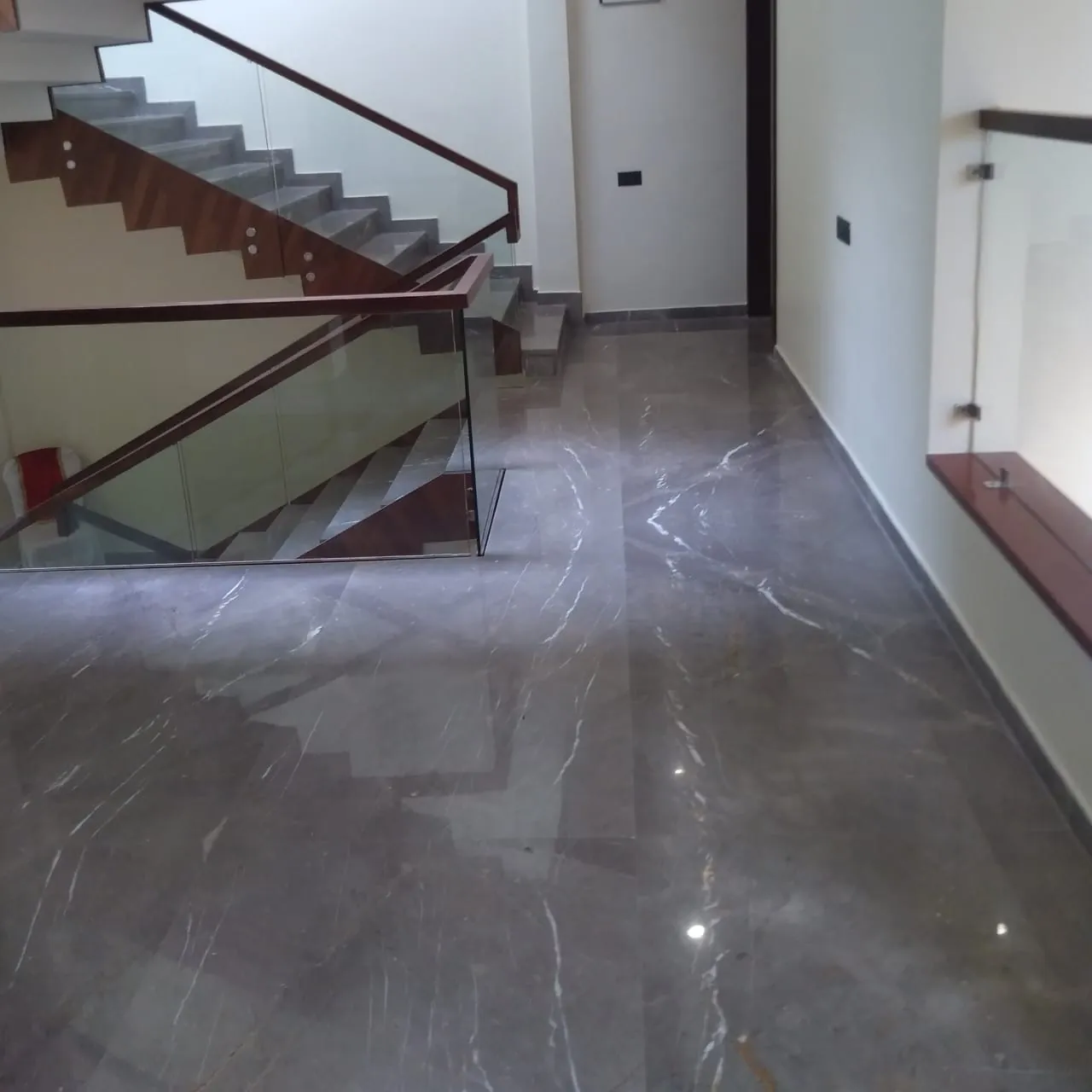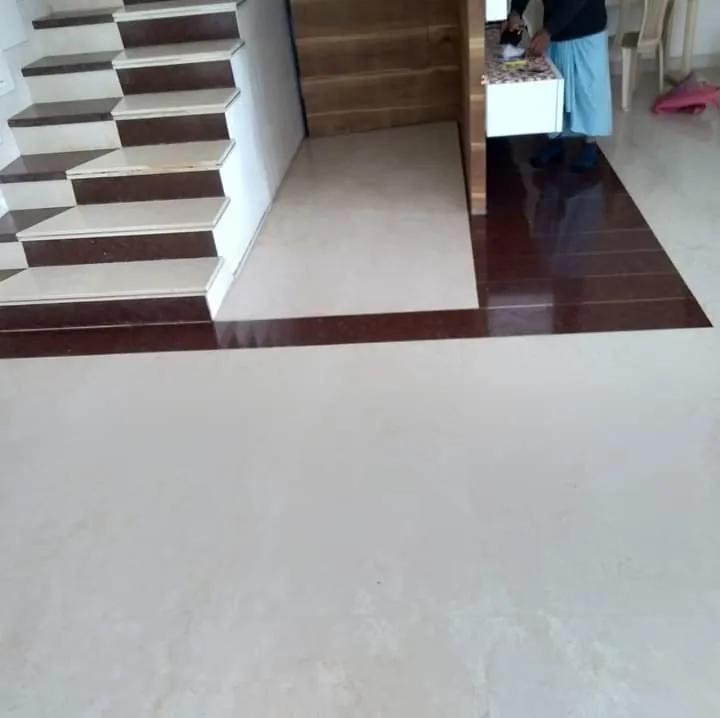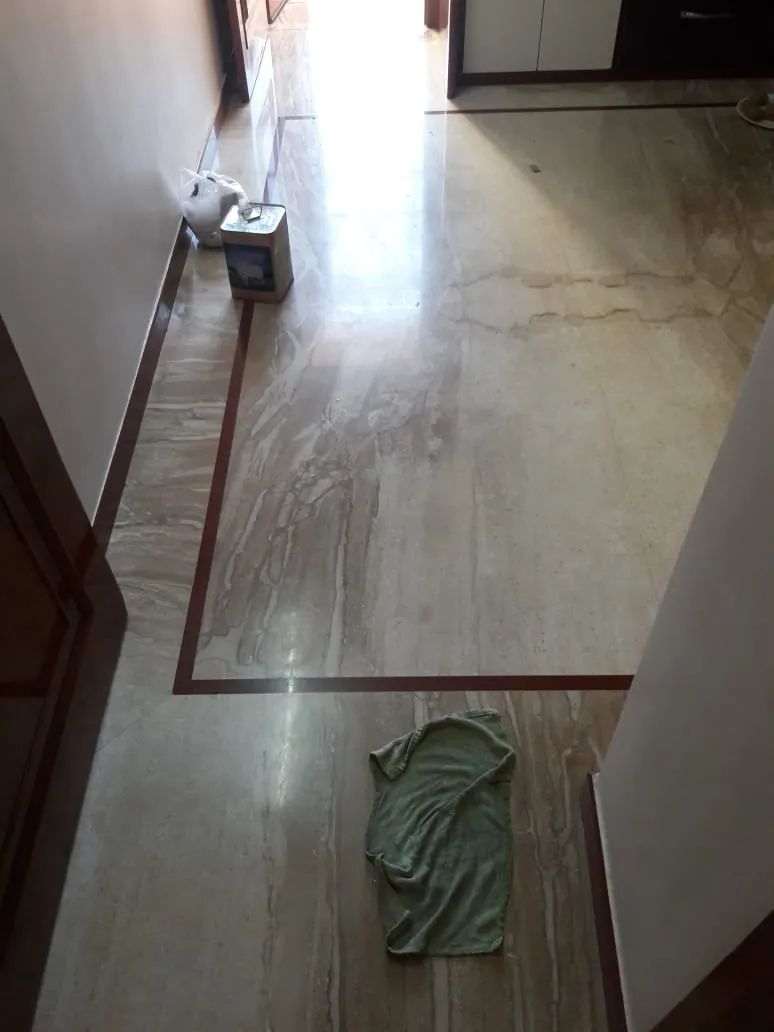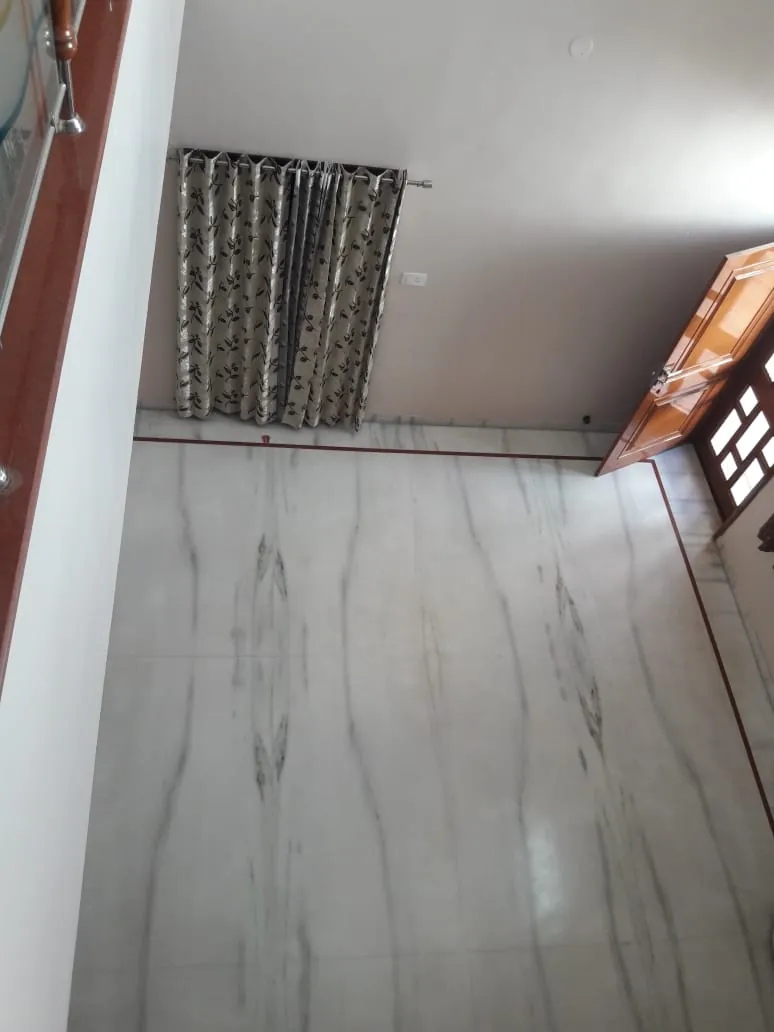
"Which is the best white marble?" is a question we hear on almost every site. The answer depends on what you mean by best. The whitest stone is not always the hardest. The hardest is not always the most affordable. And the most famous name is not always right for every room. This comparison covers the white Indian marbles we fix most often, and how they behave once they are on the floor.
What to compare in a white marble
- Whiteness and veining: pure white, milky white, or white with grey or brown veins.
- Hardness and density: affects scratch resistance, stain resistance and how long the polish lasts.
- Porosity: lower porosity means fewer stains and less yellowing from cement and moisture.
- Slab size: bigger slabs mean fewer joints.
- Price and availability: whether you can get enough matching stone for your whole house.
Makrana white marble
Makrana, from Nagaur district in Rajasthan, is the most respected white marble in India. Good Makrana is dense and high in calcite, takes a deep polish and keeps it for years. Varieties include Albeta, Kumari, Dungri, Chak Dungri and Adanga, each with its own look.
- Strengths: durability, low porosity in good grades, polish that improves with age, traditional prestige.
- Limitations: premium grades are expensive, slab sizes are smaller than imported stone, and natural spots and veins are common.
- Best for: temples, pujaghar, main halls, staircases and homes meant to last generations.
Ambaji white marble
Ambaji marble comes from the Banaskantha area of Gujarat, close to the Rajasthan border. It is known for bright whiteness and is widely used in temples and homes.
- Strengths: good whiteness, often more affordable than top Makrana, good availability.
- Limitations: quality varies a lot by lot, and some grades are softer than Makrana.
- Best for: homes, temples and halls where a bright white look is wanted at a moderate budget.
Rajnagar white marble
Rajnagar and the wider Rajsamand belt produce a large share of India's marble. The white varieties range from economical stone with grey veins to finer grades with a clean look.
- Strengths: wide range of budgets, large availability, good for big projects.
- Limitations: lower grades can have cracks, patches and more variation, so careful selection is needed.
- Best for: budget homes, rental properties, terraces, stairs and large areas.
Banswara white marble
Banswara in southern Rajasthan produces white marble that is often brighter and more uniform, with a look some people compare to imported white stone. It is generally available in larger slabs than Makrana.
- Strengths: clean white appearance, larger slabs.
- Limitations: some grades are more porous and can absorb stains, so fixing and sealing need care.
- Best for: modern homes wanting a bright, uniform white floor.
Morwad and other Rajsamand whites
Morwad white and similar stones from the region are popular for budget-conscious projects. They offer a decent white with veins at an economical price, and work well where heavy foot traffic and repeated re-polishing are expected.
Side-by-side summary
| Marble | Look | Hardness | Budget |
|---|---|---|---|
| Makrana (Albeta, Kumari) | Soft white, fine veins | High | Premium |
| Makrana (Dungri) | Off-white, grey veins | High | Mid |
| Ambaji | Bright white | Medium to high | Mid |
| Banswara | Clean, uniform white | Medium | Mid |
| Rajnagar and Morwad | White with grey veins | Medium | Economy to mid |
These are general tendencies. Actual hardness and look depend on the specific quarry and lot.
Common mistakes when buying white marble
- Judging only polished samples. Dealers show the best polished face. Ask to see the back and the edges, where cracks and fillers show.
- Buying in two lots. Running short and buying the balance later almost always means a visible shade difference between rooms.
- Ignoring thickness. Thin or uneven slabs need more mortar correction and more grinding, and they break more easily during fixing.
- Choosing by name alone. Calling a stone Albeta or Ambaji does not guarantee quality. Many grades exist under each name.
- Forgetting the use. A porous bright white may look perfect in the yard, but in a kitchen-side dining area it will soak up oil and tea stains.
If you keep these points in mind, almost any of the white marbles above can give you a floor you will be proud of for decades.
Our practical advice
- Decide room by room. Premium Makrana in the pujaghar and hall, a mid-grade in bedrooms, and an economical white on terraces and stairs.
- See the actual lot. A good lot of a cheaper marble can be better than a poor lot of a famous one.
- Do a simple water test. Put a few drops of water on the unpolished back. If it soaks in very quickly, the stone is more porous.
- Buy all your stone at once so shades match.
- Insist on proper fixing. Even the best white marble can turn yellow or patchy if the mortar is too wet or the base is not prepared.
Our detailed guide on checking marble before buying is on the blog. If you plan to visit the dealers, our team also works around Kishangarh, the biggest marble market in the region.
Frequently asked questions
Which white marble is the hardest?
Good Makrana is generally considered among the hardest and most durable white marbles in India, which is why it is the traditional choice for temples.
Which white marble is the most affordable?
Economy grades from the Rajnagar and Rajsamand belt are usually the most affordable white options.
Does white marble turn yellow?
It can, mostly because of moisture and cement from below, rust from iron content, or the wrong cleaning products. Proper fixing and care greatly reduce the risk.
Is Ambaji better than Makrana?
Not better or worse, just different. Ambaji is often brighter and more affordable; Makrana is generally denser and more durable. Compare actual slabs.
Marble Fixing Flooring fixes all these marbles on homes and temples across Rajasthan. If you want help choosing the right white marble for each room, share your plan through our contact page or read more about our marble fixing and flooring service.
Marble Fixing & Flooring in Rajasthan & across India
Makrana, Dungri, Albeta, Kumari, Rajnagar, Kota and other Indian marble and stone fixed to drawings, from plain and designed floors to staircases, temples, cladding and gates.